
Susato Tabor Pipes
Pipe and Tabor Players from the 13th Century illuminated manuscript, “Cantigas de Santa Maria”
Instruction books for Tabor-Pipes are listed below.
Click here for additional Downloadable Fingering Charts.
Three-holed pipes for one-handed playing are known in many parts of the world since Medieval times. Tabor-Pipes have two finger-holes in front and one thumb-hole in the back. The instruments are designed to be played with one hand, so that the other hand is free to play a tabor-drum, a stringed-tambour, or hurdy-gurdy. Tabor-Pipes can produce a contiguous scale of one octave and a fifth, ample range for any folktune! Some people manage to play two 3-hole pipes simultaneously. It is possible to play contiguous scales because the pipes are designed to allow the playing of a series of five or more harmonics, using the three tone-holes only for filling in those notes that are not part of the harmonic series. The Tabor-Pipe plays a major scale beginning with a sequence of a major diatonic scale: whole-tone, whole-tone, whole-tone, semi -tone.
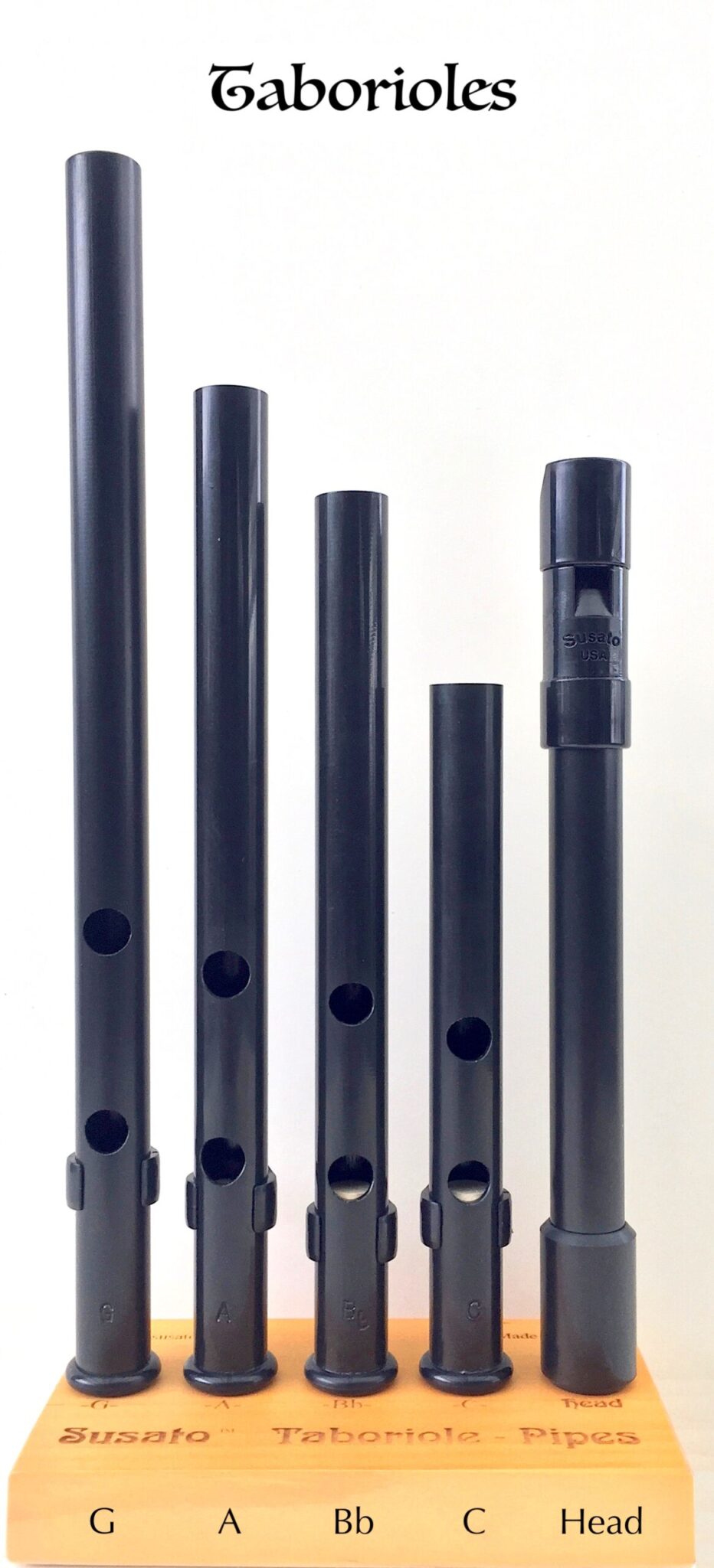
Product ID | Taboriole Taber-Pipes | Price |
|---|---|---|
$44.00 | ||
$44.00 | ||
$44.00 | ||
$44.00 | ||
$110.00 | ||
$22.00 | ||
$22.00 | ||
$22.00 | ||
$22.00 | ||
$22.00 |
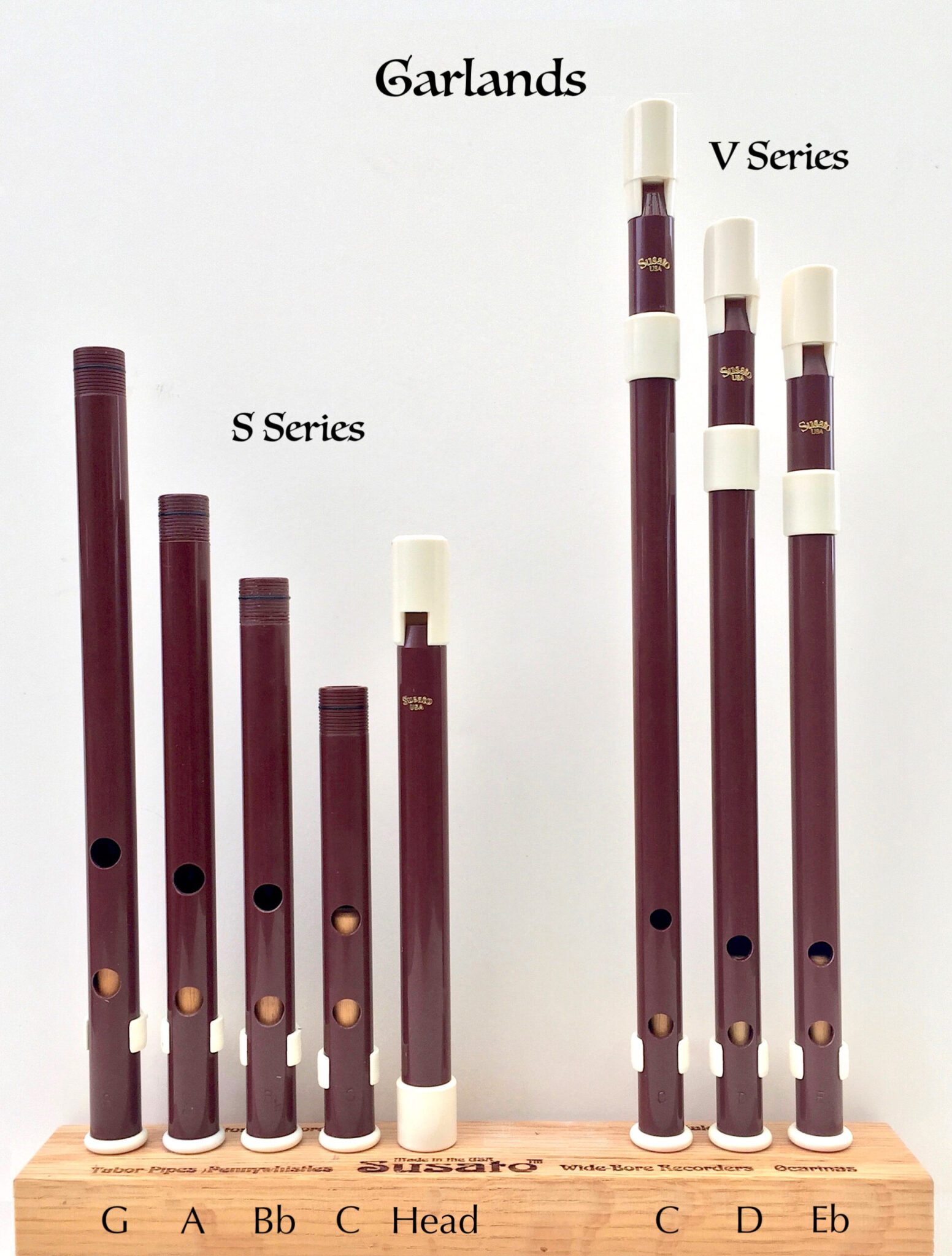
Garland Model -V- Series Tabor-Pipes | Price | |
|---|---|---|
$76.00 | ||
$76.00 | ||
$76.00 | ||
$152.00 |
Garland Model -S- Series Tabor-Pipes | Price | |
|---|---|---|
$78.00 | ||
$78.00 | ||
$78.00 | ||
$78.00 | ||
$190.00 |
Garland Model -M- Series Tabor-Pipes | Price | |
|---|---|---|
$111.00 | ||
$111.00 | ||
$111.00 |
Tabor-Pipe Accessories | Price | |
|---|---|---|
$12.00 | ||
$20.00 | ||
$11.95 |